
Same Classroom, Different Lives
It was just another normal week in 10B. Same benches. Same uniforms. Same complaints about maths. But by Friday, everyone had learned something bigger than the syllabus.
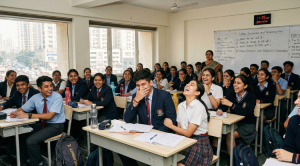
Diversity is not a chapter in a textbook. It is sitting next to you in class, eating lunch with you, walking home the same way. This resource follows one classroom through one week and what they slowly began to notice.
TeenBook Reminder
|
Day 1 (Monday): Bodies are not all the same
ABILITY AND BODY DIVERSITY
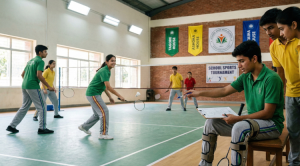
Sports period began with running laps.
Aarav finished first and got a loud “Well done.” Meera finished last and got a quiet whisper from someone behind her. “She is so unfit.” Meera pretended not to hear.
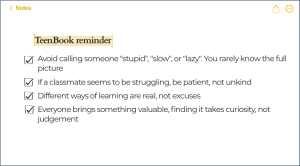
Kabir did not run at all. He uses leg braces and long runs are painful. Two boys muttered, “Lucky guy, free period.” Kabir stared at the ground.
Later that day, badminton matches began. Meera won every round. Aarav lost in the second. Kabir turned out to be the best strategist on the team.
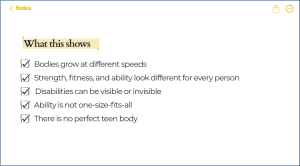
By the end of the day, “fit” did not look so simple anymore.
What is a disability?
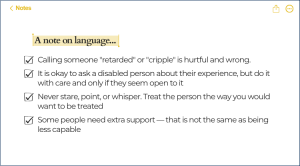
Some people are born with a disability. Others develop one later in life due to illness, injury, or other reasons. A disability is not a disease or a character flaw, it simply means that a person may find certain tasks more difficult than others their age.
Disability can be physical (difficulty with walking, seeing, or hearing), cognitive or learning-related (like dyslexia or difficulty with comprehension), or emotional and behavioural (difficulty recognising or expressing emotions).
A disability is one part of a person’s life, it does not define them. Naina uses a wheelchair and is also the funniest mimic in the room. Kabir uses leg braces and is the sharpest strategist on the team.
Body diversity is broader than disability
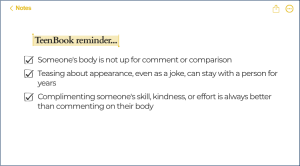
Skin colour, height, weight, hair type, the way someone walks or speaks, these are all part of how bodies vary. Commenting on someone’s skin being “too dark”, their body being “too fat” or “too thin”, or their hair being “too rough” is not a joke. It causes real harm.
In India, there is enormous pressure on teens, especially girls, around skin tone and body shape. These standards are not natural. They are learned, and they can be unlearned.
Day 2 (Tuesday): Names, pronouns and gender
GENDER IDENTITY AND EXPRESSION
Tanmay, 14
“What does everyone mean I should dress like a girl? Everything seems to be for him or for her. Sure, I was born as a girl. But I have never felt like one.”
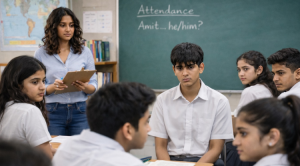
Tuesday morning. Attendance.
The teacher calls a name. Silence. She repeats it. A few students laugh. Tanmay feels that familiar knot in his stomach.
After class, he quietly tells the teacher the name and pronouns he wants used. The teacher listens. The next day, she corrects herself. A friend corrects someone else.
It is a small shift. But Tanmay walks a little straighter.
Sex and gender: Two different things
When a baby is born, they are assigned either male or female based on the appearance of their body. This is called their biological sex.
Gender is different. Gender is how a person feels about themselves, their inner sense of who they are. For many people, their gender matches the sex they were assigned at birth. For others, it does not.
Words to know
- Cisgender (or cis): A person whose gender identity matches the sex they were assigned at birth. A boy who feels like a boy. A girl who feels like a girl.
- Transgender (or trans): A person whose gender identity does not match the sex they were assigned at birth. A person assigned female at birth who identifies as a boy is a transman. A person assigned male at birth who identifies as a girl is a transwoman.
- Gender expression: How someone expresses their gender through clothing, behaviour, or appearance — this may or may not match their gender identity
- Non-binary: Some people do not identify strictly as a boy or a girl. They may identify as both, neither, or somewhere in between
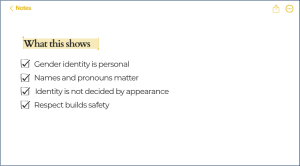
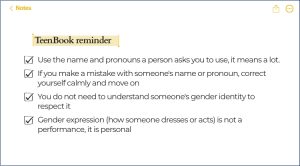
You cannot tell someone’s gender by looking at them. You cannot assume it from their clothing or their name. The only way to know is if they tell you.
Understanding gender may take time for anyone. People explore and discover who they are throughout their lives. That is completely normal.
Day 3 (Wednesday): A Rainbow of Choices
SEXUAL ORIENTATION
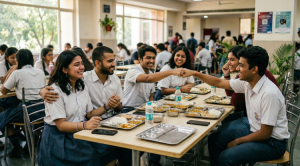
Wednesday lunch. “Future husband alert,” someone teases Nisha.
She laughs. Then stops.
“I… actually like girls.”
The table goes silent for three seconds that feel like thirty.
Then Zoya says: “Okay. So are we ordering momos or not?”
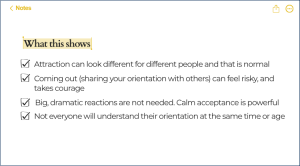
The teasing never returns. Sometimes acceptance is not dramatic. It is calm.
Aarav, 15
“Sahil told me he liked me. I was confused. Not upset, just… I had never thought about it before. I realised I did not have to have all the answers right away.”
What is sexual orientation?
As we grow up, we may find ourselves attracted to people romantically, emotionally, or physically. Who we feel that attraction toward is called our sexual orientation.
Words to know
- Heterosexual (straight): Attraction to people of a different gender. For example, a girl who is attracted to boys
- Homosexual (gay or lesbian): Attraction to people of the same gender. When this is between two males, it is called a gay relationship. Between two females, it is called a lesbian relationship.
- Bisexual: Attraction to both males and females
- Asexual: Little or no sexual attraction to anyone — this is also a valid orientation
It is common to feel attracted to someone of the same gender while growing up. It is also completely okay if you do not feel strongly attracted to anyone at all. Everyone’s experience is different, and you are allowed to take your time to understand yours.
Orientation is not a choice. It is not a phase that needs to be fixed. It is simply a part of who someone is.
Day 4(Thursday): Different ways of feeling
EMOTIONAL DIVERSITY
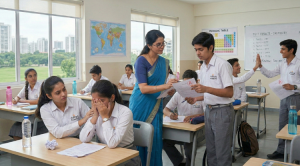
Thursday. Maths test results.
Riya cries in the corridor. Kabir jokes about failing. Aman goes completely quiet. Zoya says she does not care but checks her marks again and again.
Same marksheet. Four completely different reactions.
None of them are wrong.
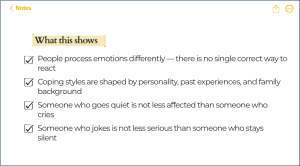
Why do people react so differently?
Emotions are universal. Everyone feels joy, sadness, fear, and frustration. But how we express and manage those emotions varies enormously from person to person.
Some people were raised in families where expressing feelings openly was normal. Others learned early that it was safer to keep feelings inside. Neither approach is right or wrong, they are simply different.
When someone responds to a situation in a way that seems strange to you, it does not mean they are being dramatic or indifferent. It means they are coping in the way that makes sense to them.
Day 5 (Friday): Brains Work Differently
NEURODIVERSITY AND LEARNING
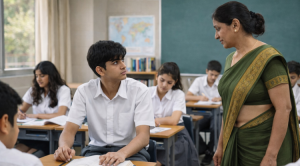
Friday. Rohit cannot stop tapping his foot during class.
“Sit properly,” the teacher says.
After a parent-teacher meeting, the school learns that Rohit has ADHD, Attention Deficit Hyperactivity Disorder. Movement actually helps him focus. After some small adjustments like short breaks and a slightly different seat, his grades improve steadily.
The issue was never effort. It was understanding.
What is neurodiversity?
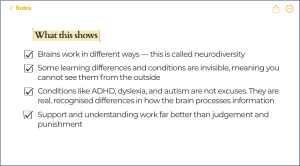
Neurodiversity refers to the natural variation in how human brains work. Most people are neurotypical their brains work in ways that match most standard expectations. Some people are neurodivergent their brains work differently.
This includes conditions like ADHD (difficulty with sustained attention and impulse control), dyslexia (difficulty with reading and writing), autism (different ways of processing social interaction and sensory input), and others.
Neurodivergent people are not less intelligent. They often have exceptional strengths in specific areas. What they need is understanding, not fixing.
Also: intelligence is not one thing
Group project day in 10B showed this clearly. Ananya writes beautifully but panics while presenting. Kabir struggles in written tests but explains ideas out loud with ease. Pooja designs the entire presentation quietly, without saying much.
The project works because of all three.
Exams measure one narrow kind of performance. They do not measure creativity, emotional intelligence, leadership, empathy, or the hundreds of other ways people are brilliant.
Day 6(Saturday): Faith, Culture and Everyday Respect
RELIGION, CASTE AND CULTURAL DIVERSITY
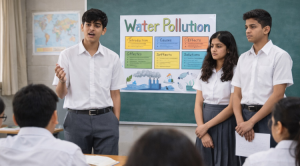
At a class celebration, Sameer offers sweets to Ayesha. She refuses quietly. Someone jokes. Neha explains that Ayesha is fasting for Ramzan.
Later, Ayesha says softly: “It gets tiring explaining every time.”
The group nods. Next time, no one jokes.
India is extraordinarily diverse
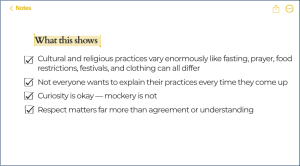
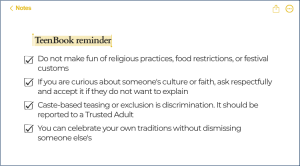
India has hundreds of languages, dozens of religions, thousands of castes and communities, and an enormous variety of customs, foods, and traditions. What is normal in one family may be completely unfamiliar in another even within the same city or school.
This diversity is one of India’s greatest strengths. It also means that classrooms will always contain people whose lives, backgrounds, and practices look very different from your own.
A word about caste
Caste is a system of social hierarchy that has existed in India for centuries. It has caused and continues to cause real harm to millions of people, particularly those from Dalit and other marginalised communities.
In school, caste discrimination can show up as exclusion, slurs, assumptions about ability, or being treated differently by peers or teachers. This is wrong, legally and morally.
If you witness caste-based discrimination, do not stay silent. Speak to a Trusted Adult. If it is happening to you, know that what is being done to you is unjust and that you deserve support.
Day 7 (Sunday): Different homes, different realities
FAMILY STRUCTURE AND FINANCIAL DIVERSITY

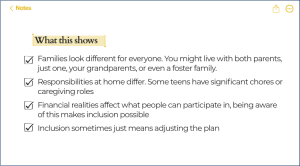
Weekend plans in 10B. Riya needs permission for everything. Zoya has no curfew. Aman has to babysit his younger siblings. Arjun cannot afford the café everyone wants to go to.
At first it feels unfair. Then someone suggests a free park meet-up instead.
No one is left out.
Why this matters
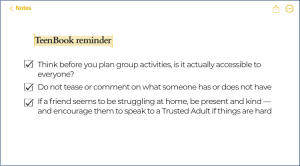
Not everyone in your class has the same access to money, freedom, time or technology. This does not make anyone better or worse. It simply means that some things that feel casual to you (a café meetup, a school trip, a new phone) may feel stressful or impossible to someone else.
Making a comment about someone’s phone being old, their bag being worn, or their clothes being from last year is unkind, even as a joke. You rarely know the full story of someone else’s life.
When Being Different Hurts
BULLYING, EXCLUSION AND ONLINE HARM
Anonymous
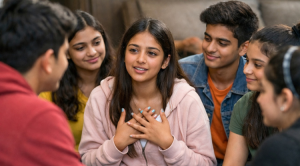
“It’s hard. I have always been teased for looking different. At this new school, someone posted rude comments on my Snapchat. I feel very lonely. Why did I have to be different? I am not sure what to do.”
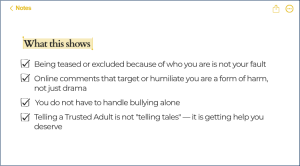
Being different in how you look, how you feel, who you are attracted to, how your brain works, what you believe, can sometimes make you a target. That is not fair. And it is not something you have to manage alone.
What counts as bullying?
Bullying is repeated, deliberate behaviour that causes someone harm. It can be physical (hitting, pushing), verbal (name-calling, taunting), social (excluding someone, spreading rumours), or online (posting hurtful comments, sharing private images, sending threatening messages).
All of these are serious. Online bullying, sometimes called cyberbullying, can feel especially hard to escape because it follows you home.
What you can do
If something hurtful happens online, a cruel comment, a rude post, something shared without your permission, close the app, screenshot it if safe to do so, and tell a Trusted Adult as soon as possible. You do not have to respond to the person who posted it.
If you are being bullied at school, tell a teacher, counsellor, or parent. If the first person you tell does not help, tell another. Keep going until someone takes it seriously.
If you see someone else being bullied or excluded because of who they are, do not stay silent. Even saying “that’s not okay” makes a difference.
Trusted Adults: Who They Are and When to Go to Them
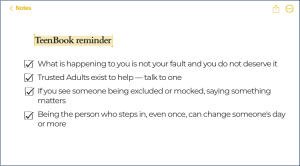
Across all of these topics like gender, orientation, disability, faith, family, bullying, there will be moments when you have questions, feel confused, or need support that goes beyond what you can handle alone.
That is what Trusted Adults are for.
Who is a Trusted Adult?
A Trusted Adult is someone older than you who is knowledgeable, honest, and genuinely has your best interests at heart. They might be a parent or guardian, an older sibling or cousin, a grandparent, a teacher, or a school counsellor.
Not every adult will give you the right answers or react in the way you hope. If one Trusted Adult does not respond well, find another. You deserve someone who listens.
When should you go to a Trusted Adult?
Go when you are being bullied or excluded because of who you are. Go when something hurtful happens online. Go when you are struggling with questions about your gender or orientation and do not know where to turn. Go when you see someone else being treated unjustly and do not know what to do.
You do not need to have the full picture figured out before you speak. You can simply say: “Something is happening and I need help understanding it.” That is enough.
Quick Summary: What Diversity Actually Means
About bodies
Bodies grow differently. Disability is not a flaw. There is no perfect teen body. Comments about appearance, skin colour, size, or ability cause real harm.
About gender
Sex and gender are not the same thing. Gender is how someone feels about themselves. Use the name and pronouns people ask you to use. You do not need to understand someone’s gender to respect it.
About sexual orientation
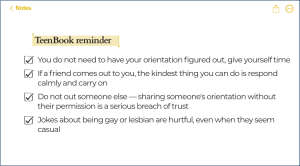
Orientation, who someone is attracted to, is a natural part of who they are. It is not a choice and not a phase. Be calm and kind if someone comes out to you. Never out someone else.
About emotions and learning
People feel and process things differently. Brains work in different ways. Neurodivergent people are not less capable. Exams do not measure everything.
About faith and culture
India is deeply diverse. Respecting someone’s practices does not require understanding them. Caste-based discrimination is wrong and should be reported.
About financial difference
Not everyone has the same access to money, time, or freedom. Plan with awareness. Do not comment on what people have or do not have.
About being different
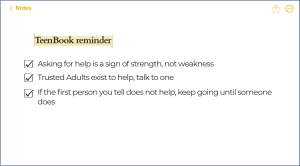
Being targeted for who you are is not your fault. Bullying, including online, should be reported to a Trusted Adult. You do not have to manage it alone.
About Trusted Adults
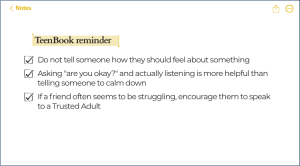
For any of the above — questions, confusion, hurt, or injustice, find a Trusted Adult and talk to them. It is always okay to ask for help.
teenbook.in
A safe space to learn, ask, and understand.

Nice